
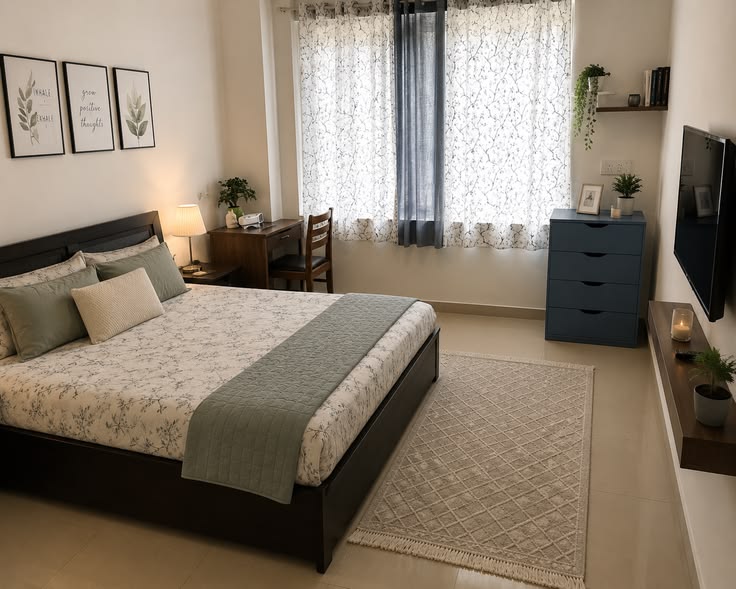
What to Check in a PG Room Before Moving In: A Complete Inspection Checklist
Finding a PG room that looks good in photographs is easy. Finding one that works well for your everyday life requires a closer inspection.
Before moving into a PG, it is worth spending time checking the room, bathroom, furniture, electricity, internet, cleanliness, security, rules and payment terms. A few minutes of careful inspection can help you identify problems before you move your belongings in.
This is especially useful for students and working professionals moving to Karnal for the first time. Whether you are considering a single room, double-sharing room, AC room or furnished accommodation, the same principle applies:
Do not inspect only how the room looks. Inspect how it will work for you every day.
This complete PG room inspection checklist covers the areas you should examine before confirming your accommodation.
Why Should You Inspect a PG Room Before Moving In?
A room can appear comfortable during a quick visit while hiding practical issues.
For example:
- A room may have good furniture but insufficient electrical points.
- A bedroom may look spacious but have poor ventilation.
- Wi-Fi may be available but weak inside the room.
- A bathroom may look clean but have poor water pressure.
- A furnished room may not include every item you assumed was provided.
- A low monthly rent may come with additional charges.
Inspecting the accommodation beforehand allows you to ask questions while you still have the option to compare other properties.
It also gives you an opportunity to document the condition of the room before moving in.
PG Room Inspection Checklist: Quick Overview
Use this checklist when visiting a PG:
| Area | What to Check |
|---|---|
| Room size | Space for bed, study area and luggage |
| Walls & ceiling | Dampness, cracks, stains and peeling paint |
| Floor | Damage, uneven areas and cleanliness |
| Furniture | Bed, mattress, wardrobe, table and chair |
| Windows | Ventilation, locks and natural light |
| Electricity | Switches, sockets, lights and fans |
| AC | Cooling and condition, if provided |
| Bathroom | Water, fittings, cleanliness and drainage |
| Wi-Fi | Signal strength and availability |
| Security | Locks, CCTV and entry arrangements |
| Housekeeping | Cleaning frequency and responsibility |
| Water | Availability and pressure |
| Rules | Visitors, timings, cooking and noise |
| Payments | Rent, deposit and additional charges |
| Documentation | Agreement, receipts and terms |
Take your time with each section rather than rushing through the property.
1. Check the Actual Room Size
The first thing to inspect is the usable space.
Don’t judge room size solely from photographs. Wide-angle photography can make rooms appear larger than they are.
Stand inside the room and consider:
- Can you move around comfortably?
- Is there enough space for luggage?
- Can you place your belongings without blocking movement?
- Is there room for a study table?
- Does the furniture leave enough walking space?
- If it is double sharing, does each resident have adequate personal space?
For students, the study area deserves particular attention.
A room that is technically large enough but crowded with furniture may not feel comfortable after you move in.
2. Inspect Walls, Ceiling and Corners
Look carefully at the less noticeable parts of the room.
Check for:
- Damp patches
- Water stains
- Peeling paint
- Mould
- Cracks
- Discolouration
- Signs of previous leakage
- Dust accumulation in corners
Pay particular attention to corners near windows, ceilings and bathroom-adjacent walls.
If you notice a problem, ask the property manager whether it has already been repaired or whether maintenance is planned.
Do not assume that a small visible issue will automatically be fixed after you move in.
3. Check the Floor
Walk around the entire room.
Look for:
- Broken tiles
- Loose flooring
- Uneven surfaces
- Water damage
- Stains
- Excessive dust
- Areas hidden beneath furniture
A clean floor is important, but structural condition matters too.
If the room has rugs or furniture covering large areas, ask whether you can inspect underneath them.
4. Test Every Light, Fan and Switch
One of the easiest mistakes is assuming that all electrical fixtures work.
Before moving in, test:
- Ceiling lights
- Tube lights
- Fans
- Switches
- Charging sockets
- Study-area sockets
- Bathroom lights
- Other visible electrical points
If a switch does not work, report it immediately.
Also check whether there are enough sockets for your daily needs.
A student may need connections for:
- Laptop
- Phone charger
- Table lamp
- Router
- Extension board
- Other study equipment
A working socket in an inconvenient location can still become a daily annoyance.
5. Check the Bed and Mattress
If the room is furnished, don’t just look at the bed—test it.
Check:
- Bed frame stability
- Mattress condition
- Mattress cleanliness
- Signs of damage
- Storage underneath, if applicable
- Adequate space around the bed
Sit or lie down briefly if appropriate to check whether the mattress is comfortable and whether the bed makes unusual noises or feels unstable.
If a mattress is damaged or heavily worn, ask whether it will be replaced before occupancy.
6. Inspect the Wardrobe and Storage
Storage often becomes an issue only after you move in.
Open every available wardrobe or cabinet.
Check:
- Available shelf space
- Doors and hinges
- Locks
- Drawers
- Dampness
- Dust
- Odour
- Space for hanging clothes
Think about your actual belongings.
If you are staying for several months, you may need space for clothes, books, documents, shoes, luggage and personal items.
For double-sharing accommodation, confirm how storage is divided between residents.
7. Check the Study Table and Chair
Students and professionals may spend several hours at their desk.
Check whether:
- The table is stable
- The chair is comfortable
- There is enough working space
- The table has access to an electrical socket
- The area receives sufficient light
- The setup works for a laptop or books
A small but functional study area can be more useful than decorative furniture that takes up valuable room space.
8. Check Windows and Ventilation
Good ventilation affects comfort throughout the year.
Open the windows if possible and check:
- Whether they open properly
- Window locks
- Airflow
- Natural light
- Dust or dirt around frames
- Outside noise
- Insects or gaps
Also consider the room at different times of day.
A room with good natural light can feel very different from one that depends entirely on artificial lighting.
9. Check the Bathroom Carefully
Never skip the bathroom inspection.
Check:
- Tap condition
- Shower
- Washbasin
- Toilet
- Drainage
- Water pressure
- Water availability
- Ventilation
- Door lock
- Mirror
- Lighting
- Cleanliness
- Signs of leakage
Run the taps if possible.
Observe how quickly water drains. Slow drainage can become a daily problem.
If the room has an attached bathroom, confirm whether it is exclusively for your room or shared with other residents.
10. Check Water Availability
Ask how water is supplied to the property.
You should understand:
- Whether water is available throughout the day
- Whether there are scheduled interruptions
- How water shortages are handled
- Whether hot water is available, if advertised
- Whether there is a backup arrangement
Do not rely solely on assumptions based on what you see during a short visit.
Ask the management directly and, where possible, speak with an existing resident.
11. Test the Wi-Fi
A Wi-Fi symbol on a property advertisement does not tell you how good the connection is inside your room.
If possible, connect your phone to the Wi-Fi and test it from the actual room.
Check:
- Signal strength
- Connection stability
- Availability in your room
- Performance near the study table
- Whether multiple residents share the connection
- Whether there are separate charges
Students attending online classes and professionals working remotely should treat reliable internet as an important part of their accommodation decision.
12. Check Mobile Network Connectivity
Wi-Fi isn’t the only connectivity issue.
Check your mobile network inside the room.
Make a test call and see whether the signal remains stable.
If you regularly make work calls, attend interviews or communicate with family, poor indoor mobile reception can become frustrating.
13. Inspect AC, Fan and Cooling
If you are considering an AC room, test the AC before confirming the room.
Check:
- Whether it switches on
- Cooling performance
- Remote control
- Unusual noise
- Visible leakage
- General cleanliness
For non-AC rooms, check:
- Ceiling fan
- Fan speed
- Ventilation
- Window placement
- Airflow
Ask whether electricity charges for AC usage are included in the rent or calculated separately.
14. Check for Unusual Smells
Your sense of smell can reveal problems that photographs cannot.
Pay attention to:
- Damp smell
- Sewage odour
- Strong chemical smell
- Stale air
- Persistent bathroom odour
- Mould-like smell
If the room smells different after the windows are opened, ask what is causing it.
Do not ignore persistent unpleasant odours simply because the room looks clean.
15. Inspect Cleanliness
Look beyond the obvious surfaces.
Check:
- Under the bed
- Behind furniture
- Wardrobe interiors
- Window corners
- Fan blades
- Bathroom corners
- Drains
- Common areas
Ask how frequently rooms and common areas are cleaned.
Also clarify whether housekeeping is included in the rent or charged separately.
16. Check Room Locks and Security
Your room should provide reasonable security for your belongings and personal space.
Check:
- Main door lock
- Door condition
- Window locks
- Access to the building
- Gated entry, if applicable
- CCTV in relevant common areas
- Visitor arrangements
Ask who has access to rooms and how maintenance personnel enter occupied rooms.
Clear policies can prevent misunderstandings later.
17. Understand Visitor and Entry Rules
Every property can have different rules.
Before moving in, ask about:
- Entry and exit timings
- Visitors
- Overnight guests
- Family visits
- Noise restrictions
- Common-area use
- Leave or absence procedures
- Guest identification requirements
Do not assume that another PG’s rules apply to your accommodation.
Get the actual property rules before paying.
18. Check Housekeeping and Maintenance
A room can be excellent on move-in day but become difficult to manage if maintenance is slow.
Ask:
- Who handles repairs?
- How should maintenance complaints be submitted?
- How quickly are common problems usually addressed?
- How frequently are common areas cleaned?
- Who handles plumbing or electrical problems?
You should know whom to contact if something stops working.
19. Check Noise Levels
Visit the PG at a time that resembles your normal schedule if possible.
Listen for:
- Traffic
- Construction
- Nearby businesses
- Loud common areas
- Other residents
- Street noise
- Machinery
- Frequent announcements or disturbances
If you are a student preparing for exams or a professional working from your room, noise can have a significant impact on your routine.
20. Inspect the Surrounding Area
The room is only part of your accommodation experience.
Walk around the nearby area and check access to:
- Grocery stores
- Markets
- Medical facilities
- Public transport
- Restaurants
- Colleges
- Coaching centres
- Workplaces
- Libraries or study spaces
A convenient location can save both time and transportation expenses.
For residents considering Sector 13, Karnal, evaluate the property based on your actual daily destinations rather than choosing a location simply because it sounds convenient.
21. Confirm What Is Included in the Rent
This is one of the most important checks.
Ask for a clear list of inclusions.
For example:
- Furniture
- Wi-Fi
- Electricity
- Water
- Housekeeping
- AC
- Maintenance
- Other services
Never assume something is included because you saw it in a photograph or heard a casual statement.
If a facility matters to you, confirm the terms before booking.
22. Understand the Complete Cost
Calculate your real monthly expense.
Ask about:
- Monthly rent
- Security deposit
- Electricity charges
- Maintenance
- Internet charges
- Food, if available
- Other applicable charges
Also ask whether there are any one-time charges when moving in.
A clear cost breakdown makes it easier to compare different PGs fairly.
23. Check the Security Deposit Terms
Before paying a deposit, ask:
- How much is the deposit?
- Is it refundable?
- When is it returned?
- Under what circumstances can deductions be made?
- Are deductions documented?
- What is the move-out process?
Keep your payment receipt or digital transaction record.
It is also useful to photograph the condition of the room and furniture on the day you move in.
24. Read the Agreement or Occupancy Terms
Do not rush through the paperwork.
Check:
- Rent amount
- Payment due date
- Deposit
- Notice period
- Refund terms
- Room allocation
- Included facilities
- Rules
- Maintenance responsibilities
- Termination conditions
If something is unclear, ask before signing.
Written terms are easier to refer to later than verbal promises.
25. Take Move-In Photos and Videos
This is a simple step that can protect both you and the property management.
Before moving your belongings into the room, photograph or record:
- Walls
- Floor
- Bed
- Mattress
- Wardrobe
- Table
- Chair
- Electrical fixtures
- Bathroom
- Existing marks or damage
Keep the photos with the date if possible.
If there is a disagreement later about pre-existing damage, your move-in records can help establish the room’s original condition.
PG Room Inspection Checklist for Students
Students should pay particular attention to:
- Study table and chair
- Wi-Fi
- Electrical sockets
- Noise
- Room lighting
- Ventilation
- Storage
- Distance from college or coaching centre
- Bathroom access
- Security
- Entry and visitor rules
- Total monthly cost
If you study for long hours, don’t underestimate the importance of the room’s environment.
PG Room Inspection Checklist for Working Professionals
Professionals should additionally check:
- Mobile network
- Wi-Fi reliability
- Workspace
- Power availability
- Commute
- Noise levels
- Entry timings
- Privacy
- Maintenance response
- AC or ventilation
If you work remotely, visit the room with your work routine in mind. Imagine taking a video meeting, working for several hours and handling a late-evening call.
What Not to Do During a PG Inspection
Avoid these common mistakes:
Don’t inspect only the bedroom
Bathrooms, common areas, entrances and surroundings matter too.
Don’t rely only on photographs
Visit the actual property whenever possible.
Don’t assume facilities are included
Ask about every important facility and its cost.
Don’t ignore small problems
A loose socket or leaking tap can become a bigger inconvenience.
Don’t rush because of urgency
Moving quickly can make it easier to overlook important terms.
Don’t pay without understanding the terms
Clarify rent, deposit, notice period and additional charges first.
A 10-Minute PG Inspection Checklist
If you have limited time, focus on these ten checks:
- Room size and ventilation
- Bed and mattress
- Wardrobe and storage
- Lights, fans and electrical sockets
- Bathroom and water
- Wi-Fi and mobile network
- Cleanliness and unusual smells
- Door and window locks
- Total rent and additional charges
- Agreement, deposit and notice terms
Then take photographs of the room before moving in.
Kunj Niwas: Inspect the Room That Matches Your Needs
Kunj Niwas in Sector 13, Karnal offers furnished accommodation for men and women, with room configurations and facilities varying by room type.
Depending on the selected room, options may include non-AC or AC accommodation, attached washrooms, balconies and kitchen facilities, along with services such as Wi-Fi, security arrangements and housekeeping.
If you are considering accommodation at Kunj Niwas, you can explore the available PG and room options and confirm the specific facilities, charges and availability with the management before booking.
You can also follow Kunj Niwas on Facebook for property updates and accommodation information.
The Best Time to Inspect a PG
If your schedule allows, don’t limit yourself to a rushed daytime visit.
A second visit can help you understand:
- Evening noise
- Traffic
- Neighbourhood activity
- Lighting
- Accessibility
- How busy common areas become
You don’t necessarily need multiple visits, but the more important the accommodation decision is, the more useful a realistic inspection becomes.
Your Final PG Inspection Checklist
Before confirming the room, ask yourself:
Room:
Is it spacious enough and well ventilated?
Furniture:
Are the bed, mattress, wardrobe, table and chair usable?
Bathroom:
Is it clean, functional and adequately supplied with water?
Internet:
Does Wi-Fi work reliably where I will study or work?
Electricity:
Do the lights, fans, switches and sockets work?
Security:
Are the locks and entry arrangements satisfactory?
Cleanliness:
Is the room and property properly maintained?
Rules:
Do the visitor, timing and noise policies suit my routine?
Money:
Do I understand rent, deposit and every additional charge?
Documentation:
Do I have the important terms in writing?
If the answer to these questions is clear, you are in a much better position to make an informed decision.
Final Thoughts
Choosing a PG is a practical decision, and a proper inspection can prevent many avoidable problems.
Look beyond the room’s appearance. Test the fixtures, inspect the bathroom, check internet connectivity, understand security arrangements, examine furniture, ask about maintenance and clarify every financial term.
For students, pay particular attention to study conditions, Wi-Fi, noise, storage and commute. For working professionals, add workspace, connectivity, privacy and travel time to the checklist.
Most importantly, document the room’s condition before moving in and keep your payment and agreement records safely.
A few extra minutes of inspection can make your transition into a new PG much smoother.
FAQs
What should I check before moving into a PG?
Check the room size, furniture, mattress, wardrobe, electricity, ventilation, bathroom, water, Wi-Fi, cleanliness, security, rules, rent, deposit and agreement terms.
Should I inspect a PG room before paying?
Yes. Inspecting the actual room helps you verify its condition, facilities and suitability before making a financial commitment.
How do I check whether a PG room is properly maintained?
Inspect walls, ceilings, floors, furniture, bathroom fittings, electrical fixtures and common areas. Ask how housekeeping and maintenance complaints are handled.
What should students check in a PG room?
Students should pay particular attention to the study table, chair, Wi-Fi, electrical sockets, lighting, ventilation, noise levels, storage and distance from their college or coaching centre.
What should working professionals check in a PG?
Professionals should check Wi-Fi, mobile network, workspace, privacy, noise, commute, electricity, AC or ventilation and property access rules.
Should I take photos before moving into a PG?
Yes. Photographing the room, furniture, bathroom and any existing damage creates a useful record of the property’s condition when you move in.
What financial details should I verify before booking?
Confirm monthly rent, security deposit, electricity, maintenance, internet, food or other applicable charges, as well as the refund and notice-period terms.
How can I check PG Wi-Fi properly?
Connect your phone to the network inside the actual room and test its signal and stability. If you rely heavily on the internet, test it near your study or work area.
Should I check the neighbourhood before choosing a PG?
Yes. Consider your daily commute and access to markets, grocery stores, medical facilities, public transport, colleges, coaching centres and other places you regularly need.
What is the most important PG inspection rule?
Don’t assume. If a facility, cost, rule or service matters to you, verify it directly with the property management before booking.